India's policymakers must define what is important for the health of the country and how it will be measured
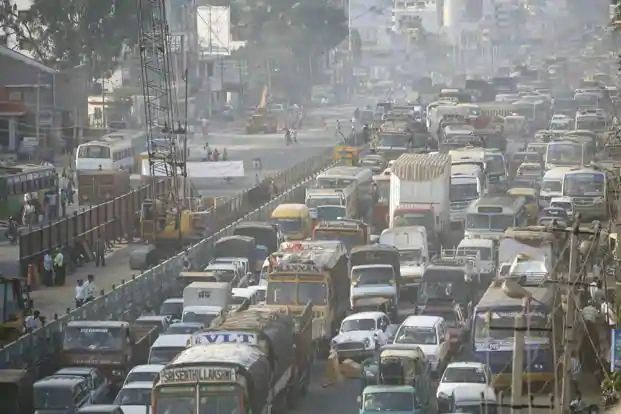
The year 2014 ended with gloom about economic growth around the world. Growth everywhere is well below the go-go levels of the 90s. Economist Dani Rodrik says that growth of productivity has been declining for many years and unless productivity increases, economic growth cannot come out of the rut.
Let us imagine what the world will be like if gross domestic product (GDP) and productivity, as economists measure them, would increase further.
2014 ended with the report that Delhi was the most polluted city in the world. Some years ago, at the launch of the ambitious plan for the Indian automobile industry in Delhi, there was only one discordant voice. The planners had pointed to the huge potential for the growth of the Indian industry. There were less than 10 cars per 1000 people in India, almost 300 in Korea, and over 600 in the US, they said. The discordant voice wondered what would happen to Delhi, congested and polluted already, if the number of cars increased 30 times to reach Korean levels?
GDP is a measure of gross economic activity. It does not distinguish between good and bad activity. Medical costs, clean-up costs, and litigation costs all add up to increase GDP. So more cars, and more accidents, and more pollution, increase India’s GDP. The question is, does this increase the well-being of human beings?
A major problem with GDP as a measure of a nation’s well-being is the use of money as a measure. The philosopher Michael Sandel explains in his book What Money Cannot Buy that many things that produce goodness in people’s lives, such as dignity, trust in one’s neighbours, and a sense of fairness, are not measurable in money terms. Therefore, they are excluded by economists from the measurement of what a country creates.
A standard measure is required to gauge quantities, especially when comparisons must be made. Therefore, countries are compared by their GDPs measured in US dollars. A problem with this standard becomes evident when comparisons are made of how much money people need to buy their essential requirements in their own countries. For this, rough calculations of GDP must be made in PPP (purchasing power parity) terms. Measurement of quantities is messy enough, economists say: therefore, we cannot include qualities such as fairness and dignity in our measurements even if they matter to people.
The measurement of productivity may also be problematic.
The French have problems with the usual way of measuring the productivity of countries. Americans criticize the French for working fewer hours and taking longer vacations. Some economists have computed that when the time the French take to ‘enjoy life’ is set aside and their productivity is measured only per hour worked, productivity of French people is comparable to those of the Americans. If the French were to produce more stuff (more cars perhaps) rather than taking time off to enjoy life, French productivity would be higher. The question is, do the French need more cars to enjoy more, or more of other stuff they would produce if they worked longer than they do? Moreover, does the world really need more cars? And does the appearance of newer models of phones to replace last year’s perfectly working models, which keeps phone factories humming and GDP growing, really improve people’s lives? Or does it just make them dissatisfied with what they have?
Nicolas Sarkozy, while serving as President of France, constituted a commission in 2009 to examine systems of measurement of the economic performance and social progress of countries. He asked three eminent economists, Nobel laureates Amartya Sen and Joseph Stiglitz and the French economist Jean-Paul Fitoussi, to examine what a new score-card for the progress of a country should be. The three economists produced a report they titled Mismeasuring Our Lives: Why GDP Doesn’t Add Up. Surveying experiments being made by several countries and economics literature which is not yet in the mainstream, they have suggested changes to the prevalent paradigm of ‘GDP above all’.
India’s development goals were described in the country’s 12th Five Year Plan as faster, more inclusive and sustainable growth. The Planning Commission which proposed these goals has been abolished. The goals remain. ‘You can only manage what you measure’, is a management mantra. Planning Commission or not, India’s policymakers must define what is important for the health of the country and how it will be measured, and report progress to citizens accordingly.
The authors of Mismeasuring Our Lives say in their preface:
“Metrics that seem out of synch with individuals’ perceptions are particularly problematic. If GDP is increasing, but most people feel worse off, they may worry that governments are manipulating the statistics in the hope that they are better off. In these cases, confidence in government is eroded, and with this confidence, the ability of government to address issues of vital public importance is eroded."
Mistrust leads to policy paralysis. Trust requires an understanding of what really matters. India’s progress cannot be gauged by GDP, and the numbers of cell-phones and cars. Pollution and safety, and equitable access to opportunities for dignified livelihoods matter too.
People make New Year resolutions to change bad habits. India’s policymakers should make a serious resolution for 2015: to develop a balanced scorecard for the nation. Perhaps this should be the first task for the new Niti Aayog.