India needs a new economic strategy
June 04, 2026
system
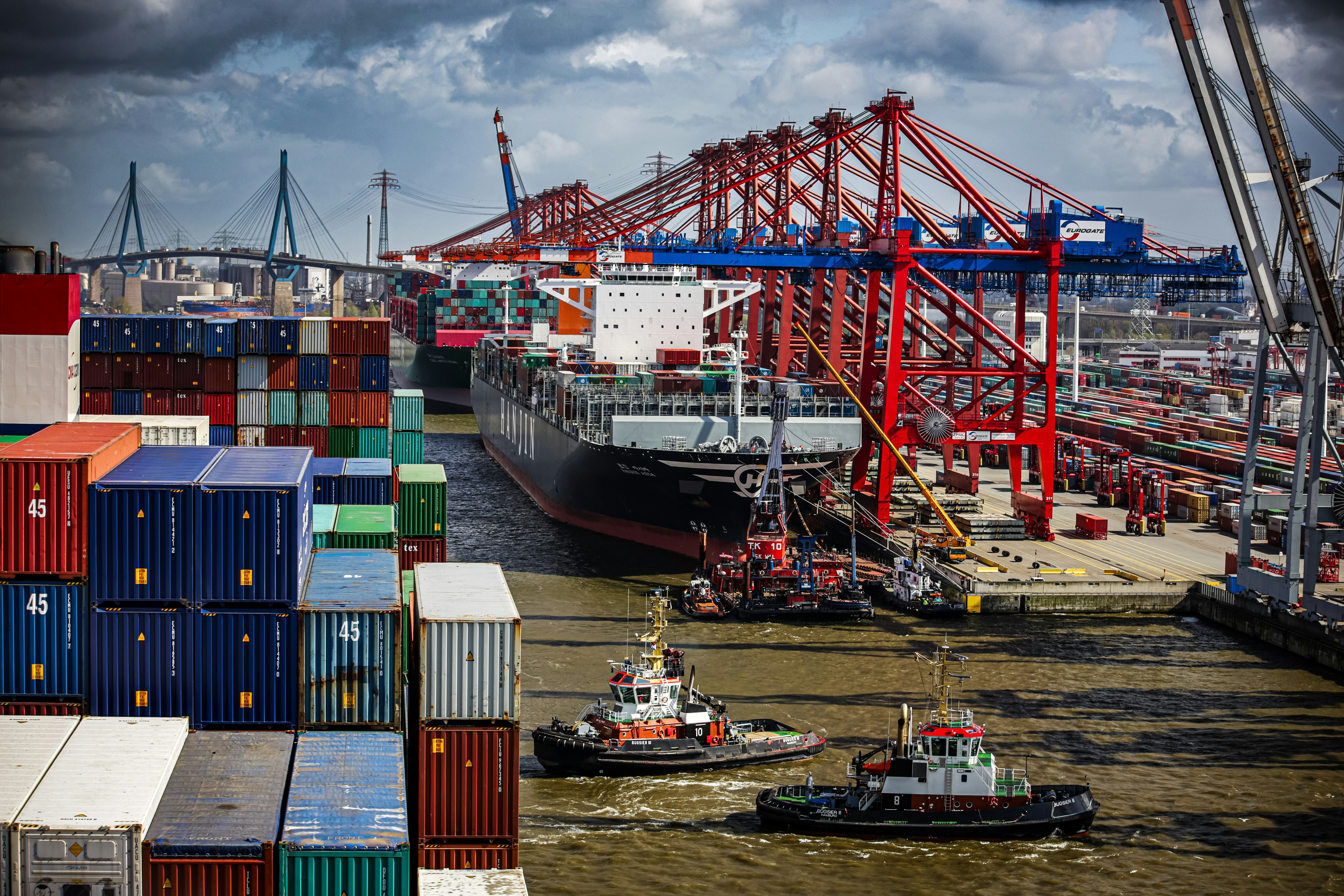
The tide of US-led globalization was spreading outward in 1991. Now it is shrinking inward. It may have made sense in 1991 to use trade as the strategy for economic growth rather than industrial development; not in 2026. In 1991, India switched from the difficult route of building its own high value adding manufacturing industries to the easier route of imports. Most Indian businesses took the easier route and became assemblers and marketeers of foreign goods. China continued to build its domestic industries. It was accused of not playing by global trade rules and even stealing foreign technology. India and China had comparable technological strengths in manufacturing in the 1980s. Now India depends on Chinese manufacturers to meet the needs of Indian consumers and provide machines and electronic hardware for Indian industries.
India has lost the race to China.
India is also squeezed in the geo-political competition between the US and China. The statistics are revealing. India’s exports to the US were $3 billion in 1991; imports were $2.0 billion. India’s exports to the US increased to $86 billion by 2025, and imports to $46 billion: a surplus of $40 billion in India’s favor. Contrast this with India-China trade. It was miniscule in 1991— less than $0.5 billion. In 2025, India exported $ 14 billion to China, but it imported $114 billion (almost entirely manufactured goods including high-tech equipment). This has created a huge $100 billion trade deficit with China.
India’s external trade to GDP ratio is 45 percent (approximately) today; China’s trade/GDP ratio is 37 percent. Overall, India’s trade is much less than China’s because the Chinese economy is five times larger. India’s economy has grown 15 times since 1991; China’s 46 times. Per capita incomes matter more to citizens than GDP. Per capita incomes in China have grown 38 times since 1991; in India, only 8 times. Climbing up statistical rankings of GDP is meaningless for the hundreds of millions of Indians, including farmers, workers, and small entrepreneurs who want to earn higher incomes and live more dignified and secure lives. Moreover, if their incomes do not increase, overall consumption will not increase, and the Indian market will not be attractive for investors. Movements of social and political unrest, already erupting, will continue to grow. The government will find it very difficult to describe them as foreign terrorism.
China’s domestic economy has become the engine of its own growth. China followed an aggressive industrial strategy from the 1980s to build its own industrial capabilities. It took good advantage of the rising tide of international globalism. By the mid-2000s, international trade accounted for 60 percent of China’s GDP, most of which was exports of a wide range of manufactured goods around the world. It has declined to 37 percent since then. Since 1991, India has become much more trade-integrated and much richer, but China scaled up far faster—in export intensity, manufacturing depth, total GDP, and income per person. China has achieved its objective of substantially increasing the incomes of its billion plus citizens. And China can also dictate terms to the US.
All Indian economists, in and outside the government, admit the Indian economy must be reformed boldly. Most of them, whether supporters or opponents of the present government, say India has not implemented the 1991 reform agenda boldly enough. They want more trade; less industrial policy (“a return to protectionism”, they say); more freedom for foreign capital without conditions; joining global supply chains more vigorously (even though global supply chains are collapsing). Some have suggested that India can skip the hard work of building domestic industry and grow a service-led economy!
An export led strategy will not work for India. It helped the Asian tigers (Japan, Korea, and Taiwan), and China because they implemented vigorous policies to build domestic industries, without which they could not have generated their huge trade surpluses. The Asian tigers seem to be in another phase of export-led growth, but only in AI-related industries (Taiwan and Korea in chips; Japan in chip-making machinery and materials). If these high-tech industries are excluded, exports from these countries have declined: Taiwan’s by as much as 40 per cent. China is beating them in all other industries. The reason is simple. With the US threatening to shut out imports, China has diversified its export markets, eating into the markets that other manufacturers, and India too, were hoping to export to, with wages rising in China and US trade sanctions.
India’s economic reformers must reform their own theories
The IMF’s report, ‘Geoeconomics and the Return of Economic Statecraft’, out on June 2, is a ‘mea culpa’. It is an admission that ‘Washington’ economics (IMF, Chicago School, Wall Street) was wrong. The report says it is time to return to economics for the real economy.
The architects of the post-World War II international economic system knew the risks of unrestricted trade. GATT was deliberately negotiated to allow robust use of tariffs to ensure essential security, prevent damage to domestic industries, respond to unfair competition, and balance of payment challenges. In the heady days following the fall of the Berlin Wall, there was a rush to adopt the simplicity of hyper-globalization and eliminate trade barriers all together.
The contrast between the economic performance of the two billion plus Asian countries since 1991 is empirical proof of the failure of the Western economics ideology that India adopted and China did not. Since the 1980s, India’s economic policies have been guided by economists wedded to the ‘US economics’ ideology, whichever government has ruled. The Planning Commission became NITI Aayog. It was old wine in new bottles. The same Washington economics ruled.
Economists on both sides of India’s socio-political divide continue to say India must implement the 1991 reform agenda more boldly. This cannot be the right strategy for India any longer. India must build depth in its own industrial base. It cannot rely any longer on free trade. Incomes must rise much faster within the country. More dignified opportunities must be created for youth to earn and learn on the job in manufacturing and service enterprises. Small farmers’ incomes must be boosted.
The bold economic reform India needs now is to break away from a failed economics ideology. New thinking is required in policy circles; not just new faces. The IMF report says, “It is time for the economics profession to take a cue from Keynes and catch up with the world as it is, rather than how we may wish it to be.”